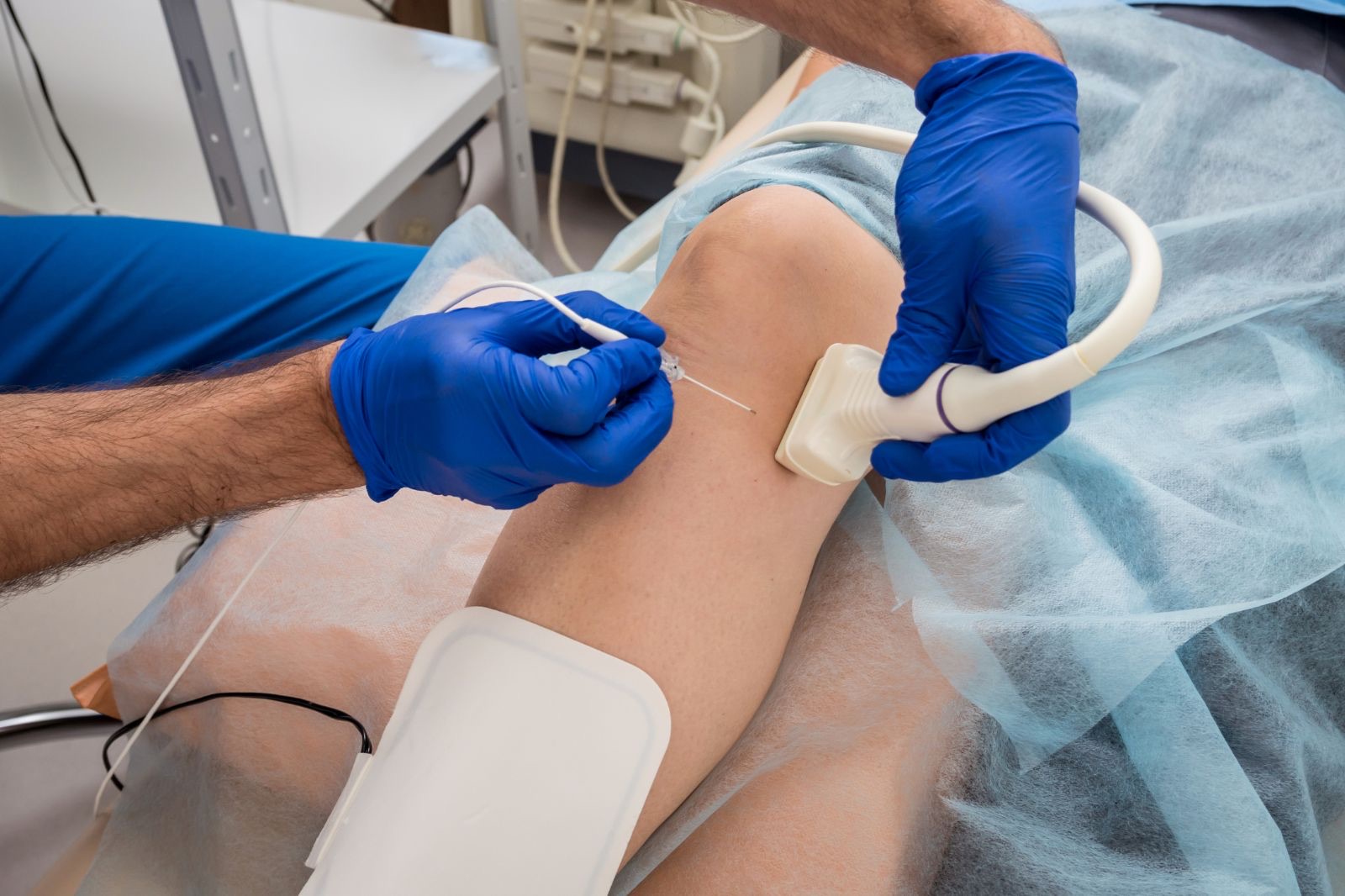
What Trigger Point Injections Are
A trigger point is a hyperirritable knot of muscle fiber that causes localized pain and can refer pain to other areas of the body. These knots develop from muscle overuse, injury, postural imbalance, or chronic stress on the tissue, and they often persist long after the original cause has resolved.
Trigger point injections involve injecting a small amount of anesthetic, typically lidocaine or bupivacaine, directly into the trigger point. The injection relaxes the contracted muscle fibers, breaks the pain cycle, and in many cases helps break down scar tissue that has formed around the area over time. This combination of chemical and mechanical disruption is what makes the procedure effective for patients who have not responded to stretching, massage, or oral medications alone.
Trigger point injections are performed by medical providers, including nurse practitioners, physician assistants, and physicians, using anatomical landmarks or ultrasound guidance for precision. The procedure is quick, typically taking only a few minutes, and is performed in the office during a regular visit. There is no sedation, no incision, and no downtime. Patients can return to their normal activities immediately afterward.
How They Work
The anesthetic component of the injection provides immediate pain relief by numbing the area and interrupting the nerve signals that sustain the pain cycle. For many patients, this alone produces noticeable improvement within minutes of the procedure.
The needle itself also plays a role. By mechanically disrupting the contracted muscle fibers, the injection physically releases the knot. This is why some patients experience relief even with dry needling, where no medication is injected at all. The mechanical disruption is a key part of the therapeutic effect.
When scar tissue is present around joints, tendons, or nerve pathways, repeated trigger point injections can help gradually break down adhesions and restore normal tissue mobility. This is particularly relevant in patients with chronic conditions where scar tissue has accumulated over months or years and is contributing to restricted movement and ongoing pain.
The injections also improve local blood flow to the treated area, which supports the body's natural healing process. Trigger points tend to develop in areas of poor circulation within the muscle, and restoring blood flow helps the tissue recover more effectively.
At Frontier, trigger point injections are typically part of a broader care plan that includes rehabilitation, laser therapy, shockwave, and other modalities rather than a standalone treatment. The goal is to address both the trigger point itself and the underlying factors that caused it to develop in the first place.
What Conditions They Treat
Trigger point injections are used across a wide range of musculoskeletal and pain-related conditions. Some of the most common applications include:
Chronic neck and back pain with myofascial components, where muscle tension and trigger points are contributing to or amplifying the patient's symptoms alongside structural issues.
Shoulder pain, particularly rotator cuff tension and impingement-related muscle guarding. When the muscles surrounding the shoulder joint tighten in response to injury or inflammation, trigger points frequently develop and perpetuate the pain cycle.
Knee pain, where trigger point injections around the knee joint target inflamed tendons and break down scar tissue in the soft tissue surrounding the joint. This is especially useful in patients with chronic knee conditions where soft tissue restrictions are limiting range of motion and contributing to discomfort.
Neuropathy, where trigger point injections along peripheral nerve pathways in the legs and feet can reduce inflammation and improve nerve gliding. When tight muscles and scar tissue compress or irritate peripheral nerves, releasing those restrictions can meaningfully improve nerve function and reduce symptoms.
Tension headaches and cervicogenic headaches, where trigger points in the cervical and upper trapezius muscles refer pain into the head and behind the eyes. Releasing these trigger points often provides significant headache relief.
Sciatica with muscular involvement, where piriformis syndrome or other muscular compression is contributing to sciatic nerve irritation.
Post-surgical scar tissue in soft tissue, where adhesions from prior procedures are causing pain, tightness, or restricted movement in the surrounding area.
What to Expect
The procedure is performed in the clinic during a regular visit. No special preparation is required, and patients do not need to fast or stop any medications beforehand in most cases.
During the injection, patients may feel a brief cramping or pressure sensation when the needle enters the trigger point. This is the muscle releasing, and while it can be momentarily uncomfortable, it typically lasts only a few seconds. Many patients describe immediate relief once the muscle lets go.
Some soreness at the injection site is normal for 24 to 48 hours after the procedure. This is similar to the soreness you might feel after a deep tissue massage and is part of the normal response as the muscle heals and relaxes.
Most patients experience meaningful improvement within a few days of the injection. The combination of the anesthetic effect and the mechanical disruption of the trigger point provides both immediate and progressive relief as the tissue responds.
Multiple sessions are typical. Trigger points often require several rounds of injection to fully resolve, especially when scar tissue is involved or when the underlying cause of the trigger point, such as postural habits or repetitive strain, is still present. Each session builds on the progress of the last.
At Frontier, trigger point injections are scheduled as part of the patient's overall care plan and coordinated with their other treatments for maximum effect. Rather than treating the injection as an isolated procedure, it is integrated with rehabilitation, chiropractic care, and other modalities so that each component of the plan supports the others.