Acute vs. Chronic Soft Tissue Damage
Soft tissue injuries affect muscles, tendons, ligaments, and fascia. An acute injury (a hamstring pull, a rotator cuff strain) occurs suddenly and triggers an inflammatory response that initiates healing within a predictable timeframe. Most acute injuries resolve with rest, ice, and time.
Chronic soft tissue injuries are different. They develop gradually from repetitive stress or incomplete healing of a prior injury. By the time a patient seeks care, the tissue has often undergone structural changes that prevent normal healing. The standard approaches for acute injuries (rest, ice, anti-inflammatories) frequently fail for chronic damage because the problem is no longer active inflammation. It is disorganized tissue repair.
Why Some Injuries Do Not Heal on Their Own
Tendons are particularly prone to chronic injury patterns. Unlike muscle, which has a rich blood supply and heals quickly, tendons receive limited circulation. This makes them efficient for load-bearing but slow to repair. When a tendon is repeatedly stressed beyond its tolerance, the body lays down new collagen in a disorganized way, resulting in scar tissue and structural weakness rather than restoration of normal architecture.
This condition is called tendinopathy (rather than tendinitis, since inflammation is often absent in the chronic stage). It commonly affects the Achilles, patellar, rotator cuff, and elbow tendons. Ligament injuries can leave joints with chronic laxity, where stabilizing structures never fully tighten, leading to ongoing pain and repeated re-injury.
When to Go Beyond Rest
If pain persists beyond six to eight weeks without meaningful improvement, if the same injury returns repeatedly, or if the injury is significantly limiting daily function, continued rest is unlikely to resolve the problem. Waiting may allow tissue to undergo further degenerative change.
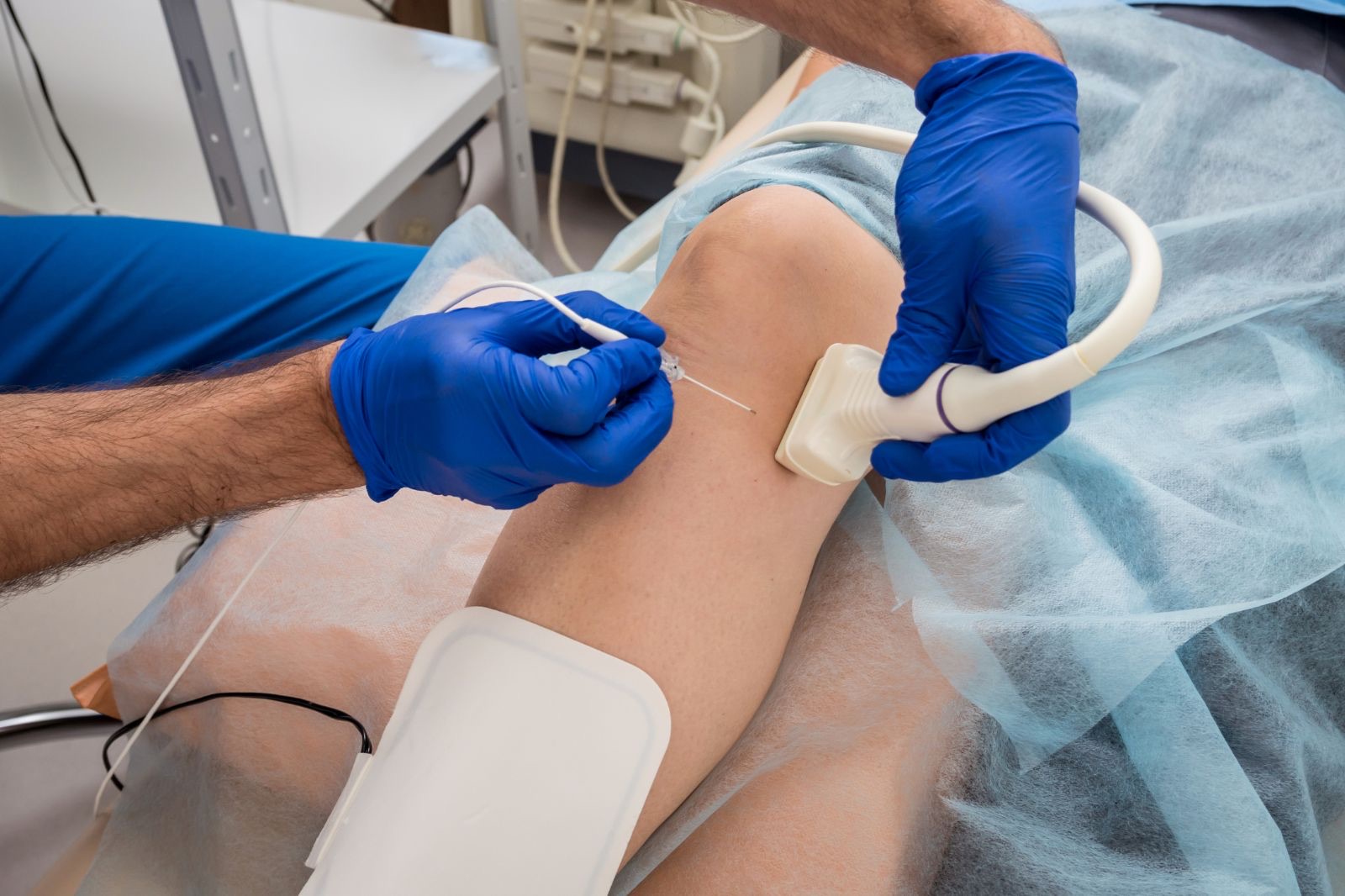
Diagnostic ultrasound can show the real-time structure of tendons and ligaments in ways that MRI does not always capture. Depending on findings, treatment may include ultrasound-guided injections targeting the affected tissue, platelet-rich plasma (PRP) to stimulate healing, or prolotherapy to address ligamentous laxity. These are established interventions with a growing evidence base for specific soft tissue conditions.
Restoring Function
The goal of treating chronic soft tissue injuries is restoring the structural integrity of the tissue so it can handle normal load without breaking down again. This usually involves a progressive loading program in conjunction with interventional treatment. The specific activities a patient needs to return to (physical labor, exercise, daily tasks) shape what the treatment plan looks like and how progress is measured.
If you have a soft tissue injury that has not improved with rest and basic treatment, or one that keeps returning, schedule an evaluation with our team.