What Regenerative Medicine Actually Means
Regenerative medicine is a broad term that refers to therapies designed to support the body's own capacity for tissue repair rather than simply masking symptoms with medication. In the context of pain management, these therapies generally fall into two categories: platelet-rich plasma (PRP) and biologic injections.
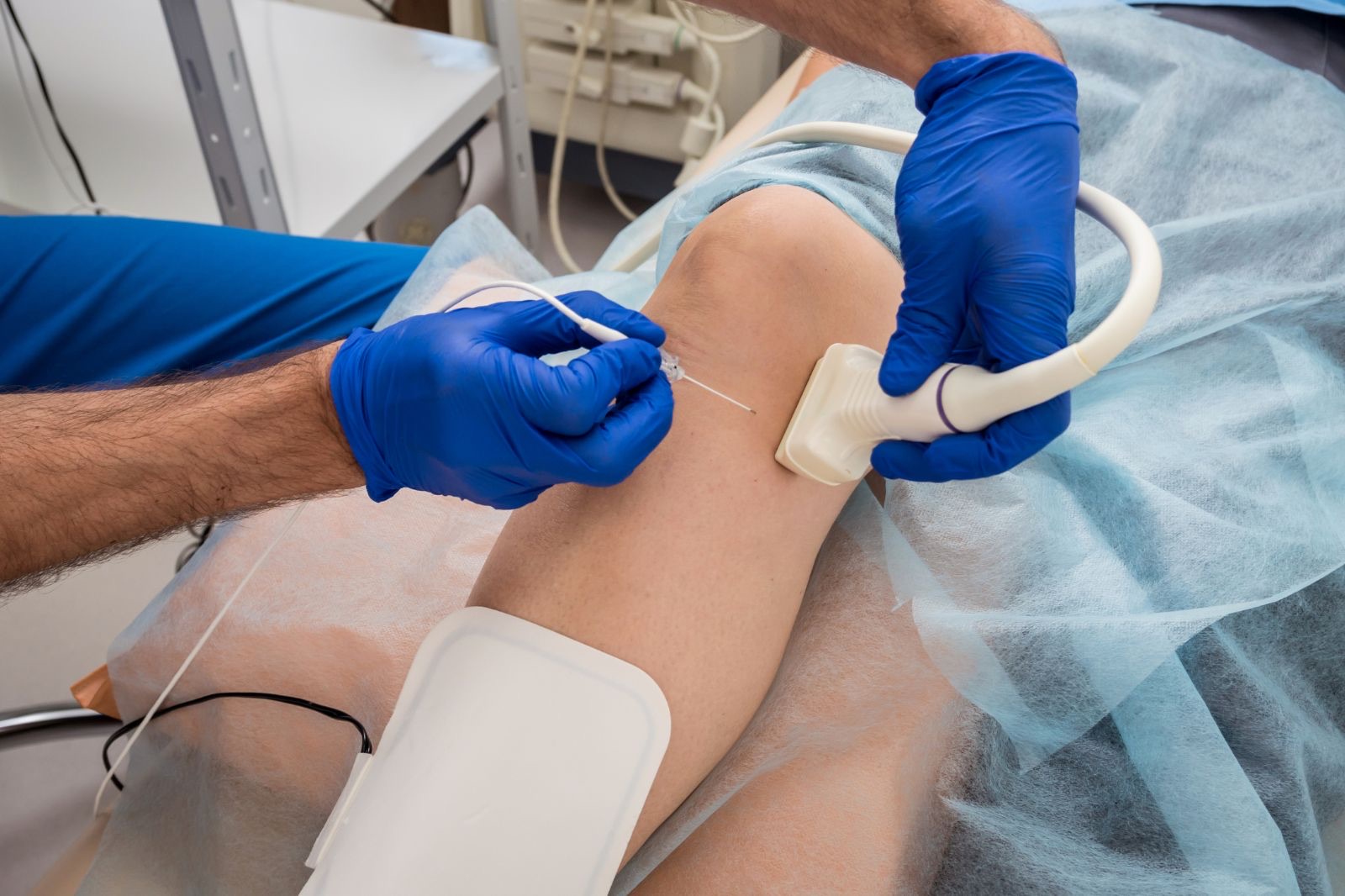
PRP is an autologous therapy, meaning it is derived entirely from the patient's own blood. A small blood draw is processed in a centrifuge to concentrate the platelets and growth factors, which are then injected directly into the site of injury or damage under image guidance. Platelets contain proteins that play a role in tissue healing, reducing inflammation, and recruiting the body's repair cells to an injury site. Because it comes from the patient's own blood, there is no risk of allergic reaction or rejection.
Biologic injections are a separate category of regenerative therapy that use allograft tissue products derived from donated human tissue, processed and regulated under FDA tissue banking guidelines. These products contain concentrated growth factors, cytokines, hyaluronic acid, and extracellular matrix proteins that support tissue repair at the cellular level. They are used in cases where a higher concentration of regenerative components may be beneficial beyond what PRP alone provides. Both PRP and biologic injections are fundamentally different from corticosteroid injections or oral medications, which reduce symptoms temporarily without contributing to tissue repair.
Where the Evidence Stands
PRP has been studied in peer-reviewed clinical trials across a range of musculoskeletal conditions. The strongest evidence exists for knee osteoarthritis, where multiple randomized controlled trials have shown that PRP injections provided greater and longer-lasting improvement in pain and function compared to hyaluronic acid injections and corticosteroid injections. Published research has also documented favorable outcomes in chronic tendon injuries including lateral epicondylitis, Achilles tendinopathy, and rotator cuff tendinopathy, as well as ligament injuries and certain soft tissue conditions.
Biologic injection therapies have a growing body of clinical literature supporting their use in joint degeneration, soft tissue repair, and inflammatory conditions. Published studies have reported improvements in pain scores, functional outcomes, and patient satisfaction in conditions including osteoarthritis and chronic tendon injuries. The evidence base for biologics continues to develop as more clinical data is published.
It is important to be straightforward about what this evidence does and does not say. Both PRP and biologic therapies have shown promise in supporting tissue repair and reducing symptoms in specific clinical contexts. Neither is a guaranteed outcome for every patient or every condition. Response varies based on the severity of the condition, the patient's overall health, the quality and type of the preparation, and the accuracy of the injection placement. Some patients experience significant improvement. Others experience modest benefit. The clinical literature supports these therapies as reasonable treatment options for appropriate candidates, not as universal solutions. We present them to patients in those terms.
Who Is a Candidate
Not every patient is a candidate for regenerative therapies, and we evaluate candidacy on a case-by-case basis. Factors that influence whether PRP is appropriate include the specific condition being treated, the severity and duration of the injury or degeneration, the patient's age and overall health, and whether the patient has realistic expectations about what the therapy can and cannot accomplish.
PRP tends to be most appropriate for patients with mild to moderate joint degeneration, chronic tendon or ligament injuries that have not responded adequately to conservative treatment, and certain soft tissue conditions where the body's natural healing response may benefit from concentrated growth factor support. It is generally not indicated for patients with advanced joint destruction where the structural damage is beyond the point where biologic support can make a meaningful difference, or for conditions that have a more appropriate surgical or interventional solution. Candidacy is determined through clinical evaluation, diagnostic imaging review, and a direct conversation with the patient about what we believe the therapy can realistically offer in their specific situation.
How Regenerative Therapies Fit Into Our Practice
At Frontier Pain Relief, regenerative medicine is one component of a broader treatment approach. We do not offer PRP as a standalone service disconnected from the rest of a patient's care plan. When regenerative therapy is indicated, it is integrated with the patient's existing treatment pathway, which may include rehabilitation, interventional pain procedures, chiropractic care, nerve block protocols, or other modalities depending on the condition.
The rationale for this approach is clinical, not commercial. Regenerative therapies tend to produce better outcomes when the surrounding treatment plan supports what the therapy is trying to accomplish. A PRP injection into an arthritic knee is more likely to provide lasting benefit when the patient is simultaneously strengthening the muscles that support the joint and addressing biomechanical factors that contributed to the degeneration. A regenerative approach to a tendon injury is more effective when the rehabilitation protocol is designed to complement the healing timeline. If you are interested in whether regenerative medicine may be appropriate for your condition, we are happy to evaluate your case and give you an honest assessment of whether it makes sense for your specific situation.