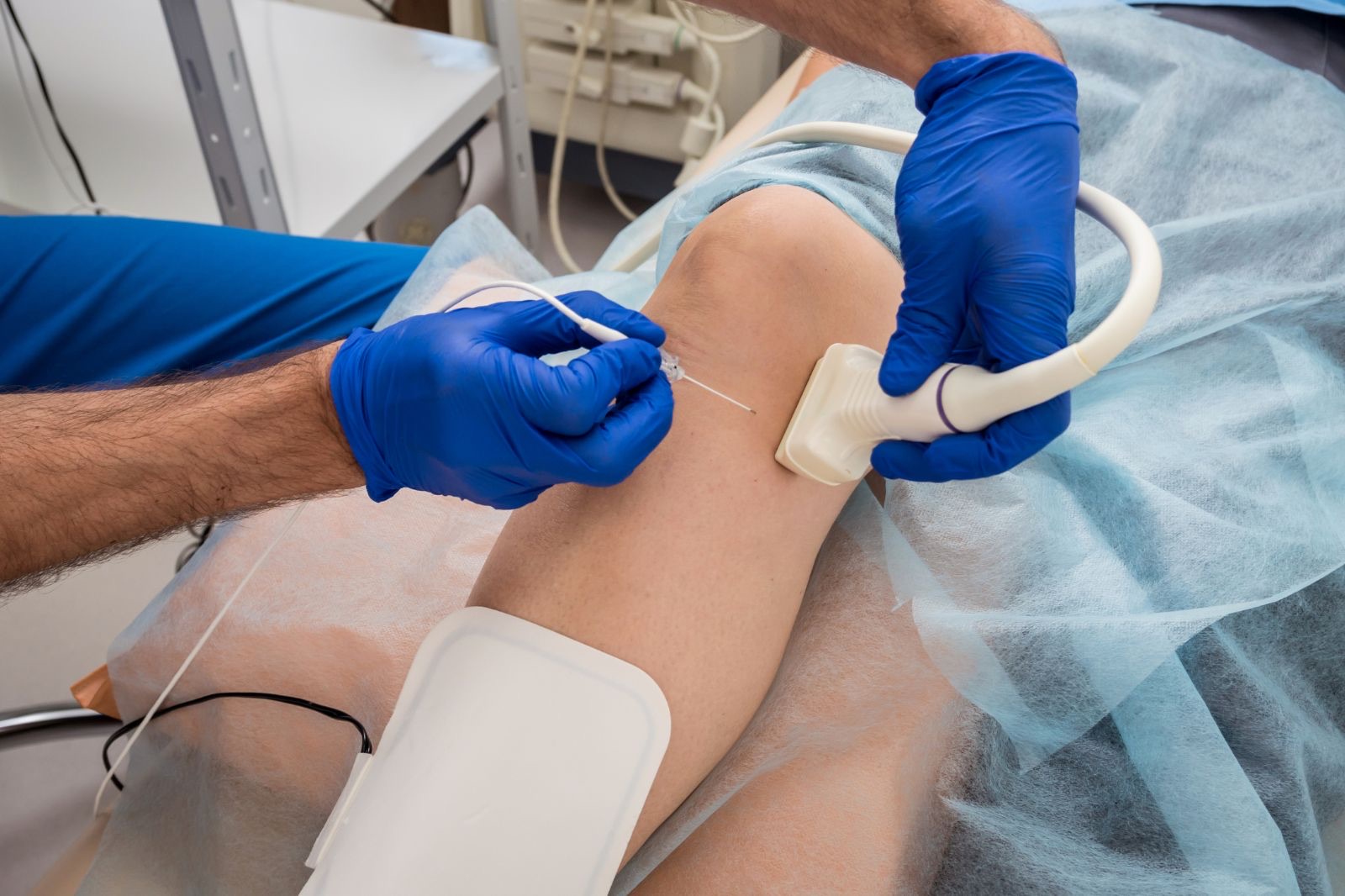
What a Peripheral Nerve Block Is
A peripheral nerve block is an injection of a local anesthetic, typically lidocaine or bupivacaine, directly to a specific peripheral nerve or nerve pathway under ultrasound guidance. Unlike systemic medications that travel through the entire body to reduce pain perception in the brain, a nerve block delivers the medication precisely where the nerve dysfunction is occurring. The ultrasound allows the provider to visualize the nerve in real time and guide the needle to the exact target, which improves both the accuracy and safety of the procedure.
This is a routine treatment that we perform regularly at Frontier Pain Relief for patients with peripheral neuropathy. The most commonly targeted nerves include the common peroneal nerve, the tibial nerve, the sural nerve, and other peripheral pathways depending on the patient's symptom distribution. The procedure is performed in the office, requires no sedation, and most patients resume normal activity the same day. It is not a surgical procedure and does not involve any implants, incisions, or general anesthesia.
How Nerve Blocks Affect Neuropathy
The benefit of a peripheral nerve block in neuropathy goes beyond temporary pain relief. When peripheral nerves are damaged, they often develop abnormal electrical activity called ectopic discharges. These are spontaneous, pathological signals that the nerve generates on its own, independent of any actual stimulus. This is part of what produces the burning, tingling, shooting pain, and hypersensitivity that neuropathy patients experience. The nerve is not just failing to transmit signals properly. It is actively generating false pain signals.
A targeted nerve block interrupts this abnormal firing pattern. Research published through the National Institutes of Health has documented that ultrasound-guided local anesthetic injections into peripheral nerve pathways can reduce neuropathic symptoms and improve nerve conduction. The local anesthetic temporarily silences the ectopic discharges, which appears to allow the nerve to reset its signaling pattern. In clinical practice, many patients experience relief that extends well beyond the expected pharmacological duration of the anesthetic itself, suggesting that breaking the cycle of abnormal nerve firing has a therapeutic effect independent of the numbing agent. Serial nerve blocks performed over a series of weeks have shown cumulative benefit in published studies, with patients maintaining measurable improvements in nerve conduction velocity and symptom reduction.
What the Procedure Looks Like
The patient is positioned comfortably and the provider identifies the target nerve using a high-frequency ultrasound transducer. The nerve, surrounding tissue, and nearby blood vessels are all visible on screen in real time. A small-gauge needle is advanced under continuous ultrasound visualization until the tip is positioned at the target nerve. The local anesthetic is then injected, and the provider can see the medication spreading around the nerve on the ultrasound to confirm accurate placement.
The entire procedure typically takes between ten and twenty minutes. Most patients feel pressure and a brief sting from the needle, followed by a gradual onset of numbness or warmth in the distribution of the targeted nerve. There is no recovery period. Patients walk out of the office and return to their normal routine. Side effects are minimal and typically limited to temporary numbness or mild soreness at the injection site. Because the medication is delivered locally to the nerve rather than systemically, there are none of the cognitive, gastrointestinal, or hormonal side effects associated with oral pain medications like gabapentin or opioids.
Where Nerve Blocks Fit in a Treatment Plan
Peripheral nerve blocks are not a standalone cure for neuropathy, and we do not present them that way. They are one component of a multi-modal treatment approach that we use at Frontier to address neuropathy from multiple angles simultaneously. The nerve block targets the abnormal signaling and pain directly at the nerve level. Electrical nerve stimulation works to promote nerve fiber recovery and improve conductivity over time. Rehabilitation and structured exercise programs help restore function, balance, and circulation to the affected areas. For patients who are candidates, regenerative medicine and platelet-rich plasma therapies support the body's own tissue repair processes.
The nerve block also serves an important diagnostic purpose. When a targeted block to a specific nerve pathway produces significant symptom relief, it confirms that nerve as a primary pain generator. That information directly informs the rest of the treatment plan and helps avoid the trial-and-error approach that many neuropathy patients have experienced elsewhere. If you have been living with neuropathy symptoms and your current management has been limited to oral medications, a comprehensive evaluation that includes targeted nerve blocks and the full range of non-narcotic interventional options may offer a different outcome. Our team performs these procedures routinely and can determine whether you are a candidate during an initial assessment.