What Carpal Tunnel Syndrome Actually Is
The carpal tunnel is a narrow passageway on the palm side of the wrist, only about an inch wide. Its floor and sides are formed by the small carpal bones, and its roof is a tough band of connective tissue called the transverse carpal ligament. Running through this confined space are nine flexor tendons that bend the fingers and, most importantly, the median nerve.
The median nerve carries sensation from the thumb, index finger, middle finger, and half of the ring finger, and it controls several of the muscles at the base of the thumb. Because the carpal tunnel is rigid and cannot expand, anything that raises the pressure inside it presses directly on this nerve. Carpal tunnel syndrome is what happens when that pressure builds to the point that the median nerve can no longer function normally.
The result is the cluster of symptoms most people recognize: numbness, tingling, and burning in the thumb and first three fingers, often with weakness or clumsiness in the hand. A hallmark of the condition is that symptoms are frequently worst at night and can wake people from sleep, prompting them to shake or flick the hand to restore feeling.
Carpal tunnel syndrome is the most common nerve compression condition, also called an entrapment neuropathy. It affects millions of adults in the United States and is one of the leading reasons people seek care for hand and wrist symptoms.
What Causes It and Who Is at Risk
Carpal tunnel syndrome develops whenever the pressure inside the carpal tunnel rises enough to compress the median nerve. There is rarely a single cause. In most patients it is the result of several factors acting together over time.
Repetitive hand and wrist activity is one of the most familiar contributors. Prolonged typing, assembly work, use of vibrating tools, and any task that keeps the wrist bent or gripping for long stretches can increase pressure within the tunnel. Sustained awkward wrist positions, rather than activity alone, tend to be the bigger driver.
Medical conditions play a substantial role and are often overlooked. Diabetes is a major risk factor, both because of fluid changes and because diabetic nerve damage makes the median nerve more vulnerable to compression. Hypothyroidism, rheumatoid arthritis, and other inflammatory conditions can cause swelling around the tendons inside the tunnel. Pregnancy frequently produces carpal tunnel symptoms because of fluid retention, though these often improve after delivery. Obesity is also an independent risk factor.
Anatomy matters as well. Some people are simply born with a smaller carpal tunnel, which is part of why the condition is more common in women. A previous wrist fracture or dislocation can narrow the space permanently. When several of these elements are present at once, such as a patient with diabetes who also performs repetitive hand work, the cumulative pressure on the nerve is what eventually produces symptoms.
Why It Gets Worse If Left Untreated
Carpal tunnel syndrome tends to be progressive. In its early stages, the numbness and tingling come and go, often appearing at night or during specific activities and easing when the hand is rested or shaken out. Because the symptoms are intermittent at first, many people assume the problem is minor and wait to seek care.
As compression continues, the symptoms become more frequent and eventually constant. Numbness that once appeared only at night begins to persist through the day. Patients commonly notice a loss of grip strength, difficulty with fine tasks like buttoning a shirt or holding small objects, and a tendency to drop things without warning. The hand can start to feel clumsy and unreliable.
In longstanding or severe cases, the muscles at the base of the thumb can begin to waste away, a change called thenar atrophy that shows up as a flattening of the palm near the thumb. This reflects damage to the motor fibers of the median nerve. The most important point is that nerve compression, if it goes on long enough, can cause damage that does not fully recover even after the pressure is relieved. This is precisely why timing matters. A median nerve caught early, while the changes are still functional rather than structural, has far more room to respond to treatment than one that has been compressed for years.
This is the same principle that applies across nerve conditions. The window in which a compressed nerve is still at a point where it can be treated is not unlimited, and it tends to narrow the longer the problem is ignored.
How It Is Treated
Treatment for carpal tunnel syndrome depends on how advanced the compression is and what is driving it, and conservative, non-surgical approaches are always pursued first.
The foundation of early treatment is reducing pressure on the nerve. Wrist splinting, particularly at night, keeps the wrist in a neutral position and is one of the most effective conservative measures while symptoms are still intermittent. Activity modification and ergonomic adjustments to a workstation or tools address the mechanical factors that aggravate the nerve. Targeted therapy, including nerve gliding exercises and soft tissue work, can help improve the way the median nerve moves through the tunnel. Just as important is addressing the underlying contributors, such as managing blood sugar in a patient with diabetes or treating an inflammatory condition that is causing swelling.
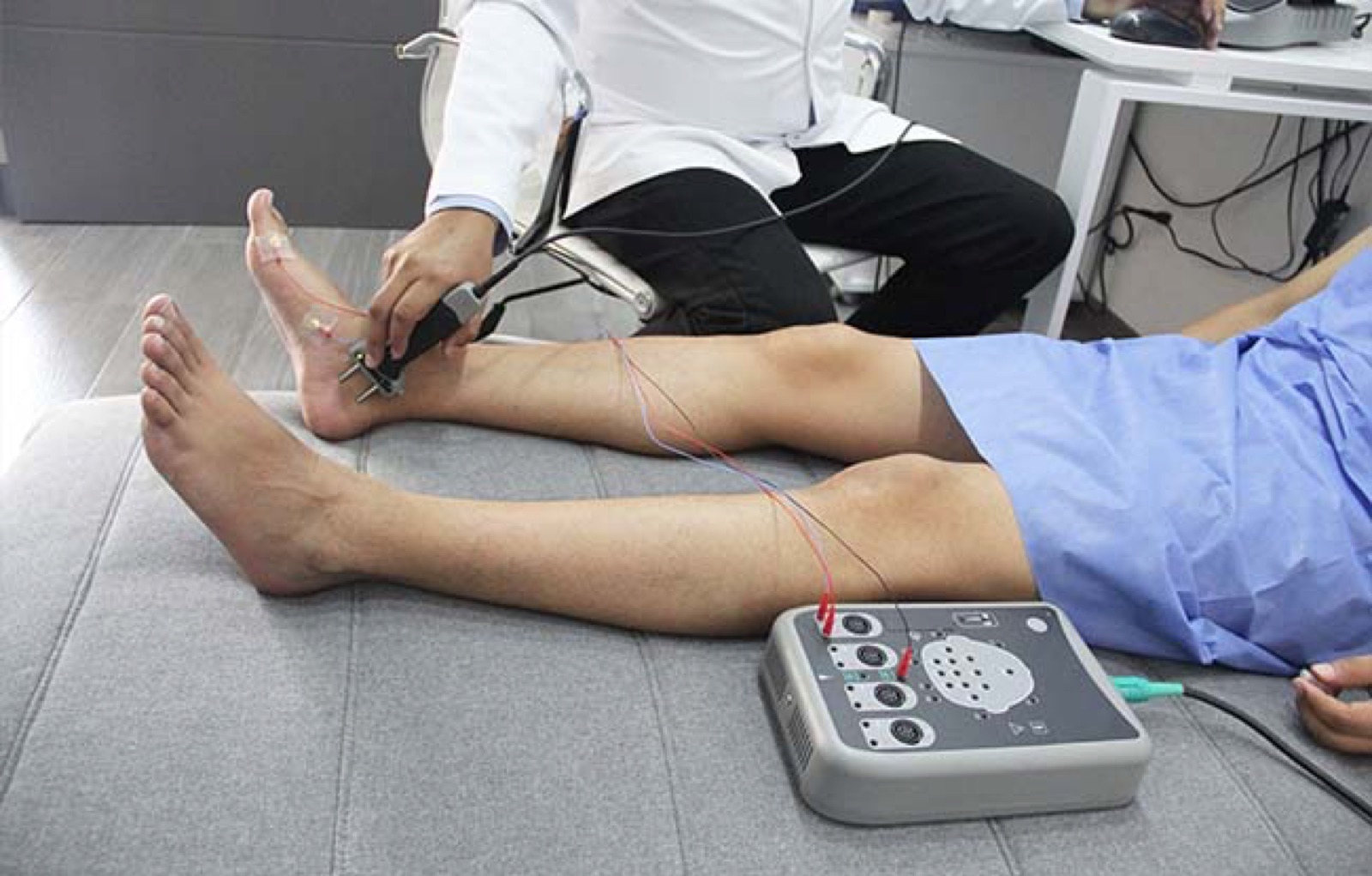
An accurate diagnosis is an important early step. A nerve conduction study can confirm that the median nerve is being compressed at the wrist, rule out other causes of hand numbness, and measure how severe the compression has become. That information guides how the condition is treated.
When symptoms persist despite these measures, image-guided injections can be used to take pressure off the median nerve more directly. These are typically performed under ultrasound guidance. They may involve a small amount of local anesthetic to numb the area and, in some cases, a corticosteroid to reduce the inflammation pressing on the nerve. A related technique known as hydrodissection uses fluid to gently separate the nerve from the surrounding tissue that is compressing it. As part of this same conservative, non-surgical pathway, Frontier also offers regenerative medicine options such as platelet-rich plasma, or PRP, which uses a concentrated preparation made from the patient's own blood and is an area of growing interest for nerve and soft tissue conditions. These injection approaches sit between basic conservative care and surgery, and which one is appropriate depends on the clinical findings and what the nerve testing shows.
Surgical release of the carpal tunnel is reserved for severe or unresponsive cases and is not the starting point. The goal of a non-narcotic, conservative-first program is to relieve the pressure on the nerve and address the factors causing it before the compression reaches the point of permanent damage.
If you have been dealing with numbness, tingling, or weakness in your hand, especially symptoms that wake you at night, a clinical evaluation can determine whether the median nerve is involved and which non-surgical options make sense for your case.